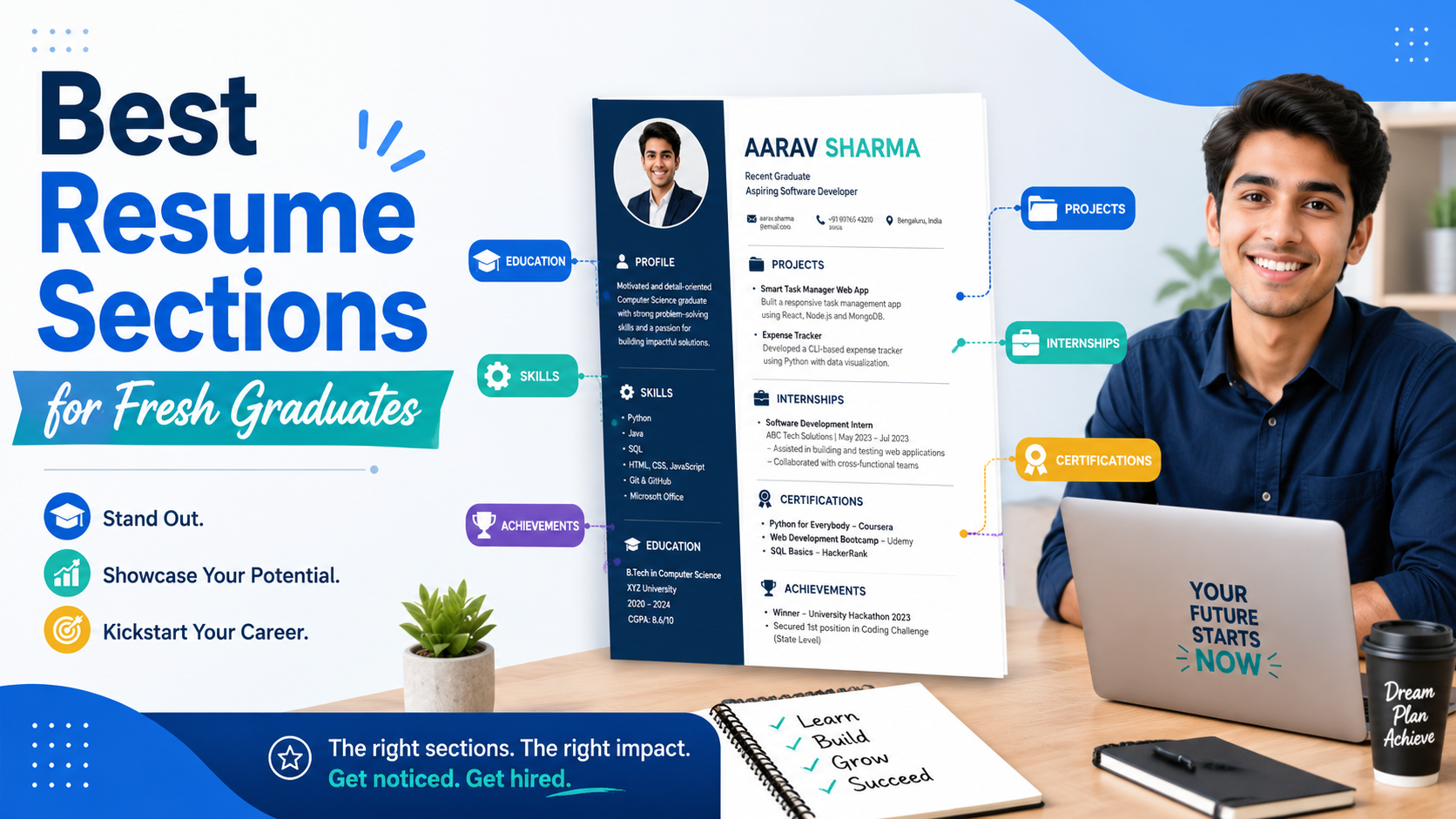
A well-structured resume helps fresh graduates present their skills and potential even without extensive work experience. The key is to highlight education, relevant skills, and practical exposure in a clear and organized way
1. Contact Information
This is the first section and should always be clear and updated.
Include:
- Full Name
- Phone Number
- Professional Email Address
- Location (City, Country)
- LinkedIn Profile (if available)
- Portfolio or GitHub (for technical roles)
Keep it simple and professional without unnecessary details.
2. Career Objective / Professional Summary
For fresh graduates, a short objective works best.
What to include:
- Your field of study
- Career goals
- Key strengths or interests
- Value you want to bring to a company
Example focus:
A motivated graduate aiming to apply academic knowledge in real-world projects while growing technical and professional skills.
3. Education
This is usually the strongest section for fresh graduates.
Include:
- Degree name
- Institution name
- Year of completion or expected graduation
- GPA/percentage (if strong)
- Relevant coursework (optional but useful)
Tip: Place this section near the top if you have no work experience.
4. Skills
Highlight both technical and soft skills.
Technical skills may include:
- Programming languages
- Tools and software
- Frameworks or technologies
Soft skills may include:
- Communication
- Teamwork
- Problem-solving
- Time management
Keep it relevant to the job you are targeting.
5. Projects
One of the most important sections for fresh graduates.
Include:
- Project title
- Short description
- Technologies used
- Your role
- Outcome or result
Focus on real work examples like websites, apps, or academic projects that show practical ability.
6. Internships / Experience
Even short internships or volunteer work matter.
Include:
- Company or organization name
- Role title
- Duration
- Key responsibilities
- Achievements or contributions
If you have no experience, you can include freelance work or academic group projects here.
7. Certifications & Courses
This section adds extra credibility.
Include:
- Online certifications (Coursera, Udemy, etc.)
- Workshops
- Training programs
- Relevant short courses
Only list certifications that match your career direction.
8. Extracurricular Activities
This section shows personality and teamwork skills.
Examples:
- Clubs or societies
- Sports
- Event organization
- Volunteer work
Keep it relevant and avoid unnecessary details.
9. Achievements & Awards
Highlight anything that sets you apart.
Examples:
- Academic awards
- Competition wins
- Scholarships
- Recognition in projects or events
Even small achievements can make a difference when presented properly.
10. Hobbies & Interests (Optional)
Include only if they add value or reflect relevant skills.
Good examples:
- Coding projects
- Reading tech blogs
- Designing
- Problem-solving activities
Avoid generic or irrelevant hobbies unless they support your profile.
Final Tip
A strong fresh graduate resume should be:
- Clean and simple
- Easy to scan
- Focused on skills and projects rather than experience
- Tailored for each job application
A well-organized structure often matters more than length.