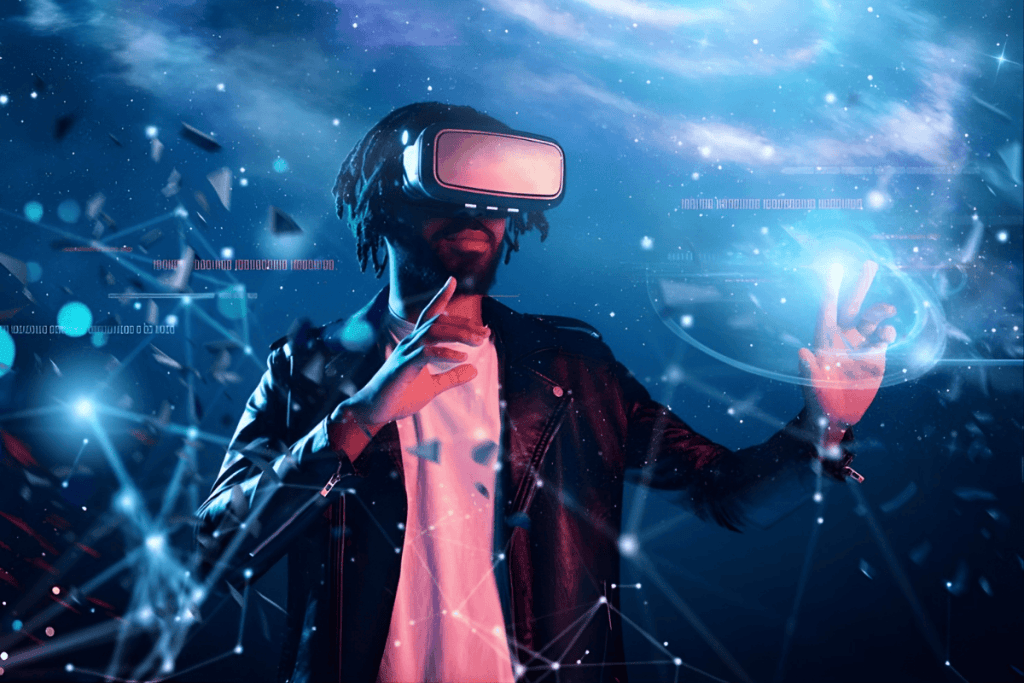
The metaverse is rapidly evolving from a conceptual idea into a functional digital ecosystem where users can interact, collaborate, and experience immersive environments. However, the true force behind making the metaverse interactive and scalable is artificial intelligence (AI).
AI enables virtual environments to become intelligent, adaptive, and responsive. It powers real-time interactions, enhances realism, and allows the metaverse to function as a dynamic digital space rather than a static simulation.
Understanding the Metaverse
The metaverse is a virtual, interconnected environment where users engage through digital avatars. It integrates multiple technologies such as virtual reality (VR), augmented reality (AR), blockchain, and AI to create immersive digital experiences.
| Component | Role in the Metaverse |
| Virtual Worlds | Digital environments for interaction |
| Avatars | User representation in virtual space |
| AR/VR | Immersive visual experiences |
| AI | Intelligence and automation |
| Blockchain | Ownership and digital assets |
This combination of technologies allows the metaverse to simulate real-world experiences in a virtual setting.
The Role of AI in the Metaverse
Artificial intelligence acts as the foundation of intelligent behaviour within the metaverse. It enables systems to process user input, adapt environments, and deliver personalized experiences, supporting the purpose of metaverse development.
AI transforms static digital environments into interactive ecosystems where users can engage naturally and efficiently.
How AI Is Powering the Metaverse
1. Intelligent Avatars
AI-driven avatars can simulate human-like behaviour, respond in real time, and adapt based on user interactions, making virtual communication more realistic.
2. Natural Language Processing (NLP)
NLP allows users to communicate using natural language. It enables seamless conversations between users and AI-powered systems within the metaverse.
3. Computer Vision
Computer vision enables gesture recognition, facial tracking, and visual interaction, enhancing immersion and user engagement.
4. AI-Generated Virtual Environments
AI can create and modify virtual environments dynamically. These environments evolve based on user behaviour, reducing manual design efforts.
5. Personalization
AI analyses user data to deliver customised experiences, including content recommendations and adaptive environments.
6. Predictive Analytics
AI predicts user behaviour and optimises system performance, improving engagement and decision-making within virtual environments.
Benefits of AI in the Metaverse
AI enhances the metaverse in several key ways:
| Benefit | Impact |
| Enhanced Realism | Lifelike avatars and environments |
| Real-Time Interaction | Instant and natural communication |
| Scalability | Efficient management of large virtual spaces |
| Automation | Reduced manual intervention |
| Personalization | Tailored user experiences |
Applications of AI in the Metaverse
AI is enabling practical use cases across multiple industries:
- Gaming: Dynamic environments and intelligent characters
- Virtual Workspaces: Remote collaboration and meetings
- Education: Interactive learning simulations
- E-commerce: Virtual shopping experiences
- Healthcare: Virtual therapy and training
These applications highlight the versatility of AI in shaping the metaverse.
Challenges and Limitations
Despite its potential, AI in the metaverse faces several challenges:
- Data privacy and security concerns
- High development and infrastructure costs
- The technical complexity of integrating multiple technologies
- Ethical considerations related to AI decision-making
Addressing these challenges is essential for sustainable growth.
Future of AI in the Metaverse
The future of AI in the metaverse is driven by continuous innovation, expanding the uses of metaverse solutions across industries. Advancements will lead to more realistic interactions, autonomous virtual ecosystems, and deeper integration with AR and VR technologies.
As AI evolves, the metaverse will become more immersive, intelligent, and widely adopted across industries.
AI Development for Metaverse Solutions
AI development is essential for building scalable and intelligent metaverse platforms. Businesses require advanced solutions to create interactive environments, intelligent avatars, and personalised user experiences.
Paklogics is a technology-driven company specialising in AI development and innovative digital solutions. With expertise in building scalable and intelligent systems, Paklogics helps businesses develop AI-powered metaverse platforms that enhance user engagement, performance, and digital transformation.
Conclusion
Artificial intelligence is the key enabler that brings the metaverse to life. It transforms virtual environments into intelligent, interactive, and scalable ecosystems.
As businesses continue to explore digital transformation, AI-driven metaverse solutions will play a critical role in shaping the future of communication, collaboration, and user experience. The metaverse is not just a concept; it is an evolving digital reality powered by AI.
Frequently Asked Questions (FAQs)
1. How does AI bring the metaverse to life?
AI enables intelligent avatars, real-time interactions, and adaptive virtual environments.
2. What technologies support the metaverse?
AI, VR, AR, blockchain, and cloud computing.
3. Why is AI important in the metaverse?
It provides intelligence, automation, and personalisation.
4. What industries use AI in the metaverse?
Gaming, healthcare, education, e-commerce, and enterprise solutions.
5. What is the future of AI in the metaverse?
More immersive, automated, and personalised virtual experiences.